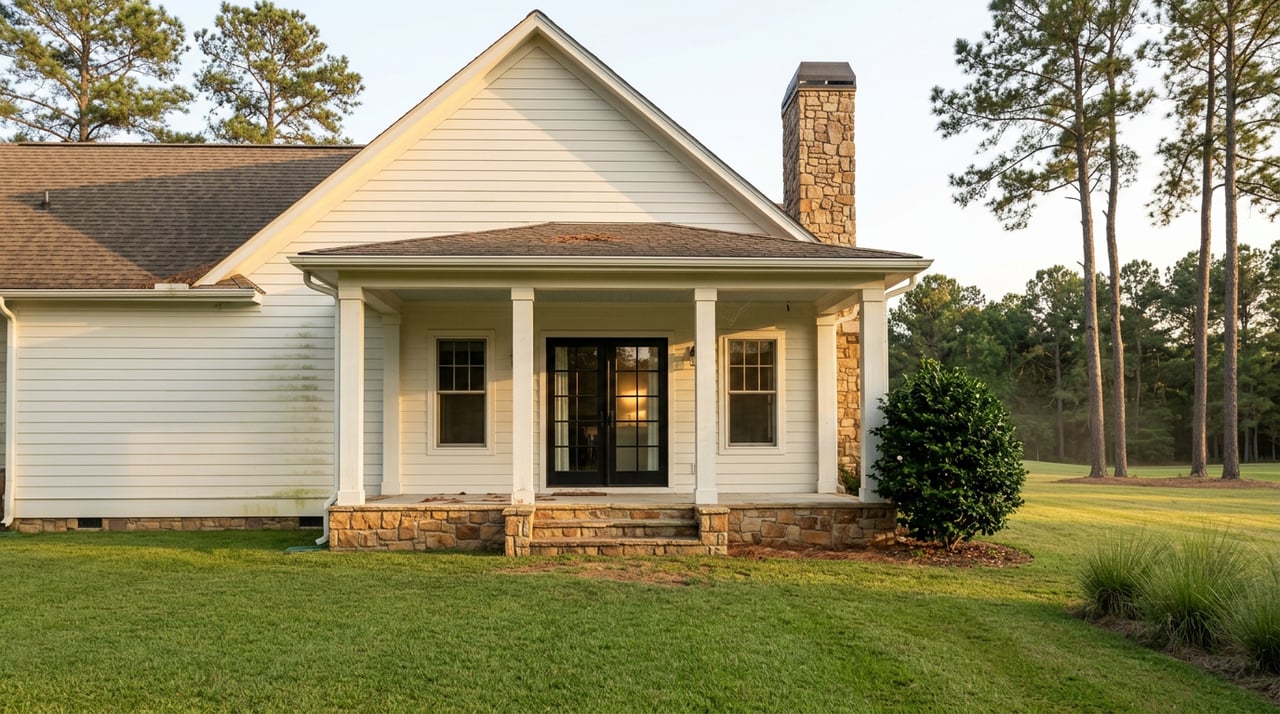
In Pinehurst, Your HOA and Your Golf Club Are Two Separate Companies
Somewhere between the inspection period and the closing table, most Pinehurst golf-community buyers ask the same question out loud: wait, who exactly am I paying, and for what? They assumed one community, one set of dues, one rulebook. Then two different invoices show up, from two different organizations, with two different boards, and neither one answers to the other.
This isn't a paperwork quirk specific to one bad-luck transaction. It's how most golf-front communities around Pinehurst are actually built, and understanding it matters more than any comparison of course rankings or clubhouse amenities. The neighborhood association that governs your street, your gate, and your fence height is very often a completely separate legal entity from the club that owns the fairway your house backs up to. They were formed at different times, they answer to different people, and they can move in different directions without consulting each other.
The clearest example sits at what golfers now call Pinehurst No. 9. The community was originally developed as National Golf Club, and the residential neighborhood built around it still governs itself through the National Property Owners Association, a North Carolina nonprofit corporation. The NPOA owns and maintains the roads, the entrance landscaping, the front gate, and the security cottage. It also appoints the Architectural Review Board that decides what you can build or change on your lot.
The golf course itself, along with the clubhouse-adjacent roads, the lakes, and the club amenities, belongs to a different organization entirely: Pinehurst Country Club, operating as The PCC, Inc., a separate for-profit corporation. Neither entity owns what the other owns. The NPOA's ten-member board serves staggered three-year terms, with three seats up for election each year, and property owners must be current on their dues to vote in that election. None of that governance touches the golf course. The club sets its own membership rules, its own fees, and its own waitlist independent of what happens at NPOA board meetings.
If you buy a home in that community, you are not joining one organization. You're entering an agreement with the homeowners association whether or not you ever set foot on the course, and a separate, optional agreement with the club if you want to play it.
The National model isn't universal across Pinehurst, and that's exactly the point. Every golf community here draws its own line between "mandatory neighborhood" and "optional club," and the line moves depending on which community you're looking at.
| Community | Neighborhood governance | Club relationship |
|---|---|---|
| National (Pinehurst No. 9) | NPOA, a resident-run nonprofit | Separate for-profit club (The PCC, Inc.); membership optional and separately negotiated |
| Pinewild | HOA covers common areas | Private club, roughly a mile from the Village, with Full Golf, Club, and Lifestyle membership tiers over 48 holes |
| Forest Creek | HOA covers common areas | Gated private club with two Tom Fazio courses, tennis, pickleball, and a strong custom-home identity |
| Country Club of North Carolina (CCNC) | HOA covers common areas | Private, member-owned club with 36 holes across more than 500 homesites and over 100 acres of lakes, straddling the Pinehurst and Southern Pines line |
| Plantation Pointe at Mid South | HOA covers common areas | Bundled model: owners receive memberships to both Mid South and Talamore as part of ownership |
| Village of Pinehurst proper | Village government | Property ownership in the Village itself carries eligibility for Pinehurst Country Club membership through the resort |
Notice that Plantation Pointe breaks the pattern entirely. Instead of a separate optional club relationship, ownership there comes bundled with memberships to both Mid South and Talamore. That's a meaningfully different cost structure and a meaningfully different risk profile than buying at National, where the club relationship is its own negotiation. You cannot assume one Pinehurst golf community works like the next. You have to ask, every time, which model you're stepping into.
Pinehurst No. 9, the Jack Nicklaus design at the National community, has been closed for renovations through August 2026. If you're reading this in early August, that closure is ending or has just ended. This is a useful, current example of exactly why the two-entity structure matters in practice, not just in theory.
During the closure, the NPOA kept functioning exactly as before. Gates operated, roads were maintained, dues were still owed, and the Architectural Review Board still reviewed exterior change requests, because none of that depends on whether the golf course is playable. The course itself, meanwhile, was entirely out of commission, which is a club-side event, not an association-side one. A buyer who closed on a National lot in June had a fully functioning neighborhood and zero access to the course they may have bought the lot to be near. That's not a defect in the transaction. It's the predictable result of two organizations operating on two different timelines with two different obligations.
The same separation cuts the other way as the course comes back online. Reopening changes tee-sheet demand, waitlist movement, and possibly membership pricing at the club level, all of which the HOA has no say over and no visibility into. If you're evaluating a golf-front lot at National this month, the course status is a club-side variable that can shift again independent of anything the neighborhood association does. Confirm current membership categories and tee-time policy directly with the club, not with the HOA, because the HOA genuinely may not know.
Because you're dealing with two organizations, you need paperwork from both before you can honestly say you understand what you're buying. At National specifically, the NPOA maintains a defined set of governing documents, and each one answers a different question:
That fifth item is the one buyers most often skip, because it doesn't come from the same office as the first four. If a listing mentions a transferable membership, get written confirmation from the club's membership office before you rely on it, and coordinate with your closing attorney to confirm whether the deed itself reflects any transfer rights. Other Pinehurst golf communities carry the equivalent split under different document names, but the principle holds everywhere: one packet from the HOA answers what you can do with your house, and a completely separate packet from the club answers what you get to do with the golf course.
As of July 2026, homes listed in Pinehurst carried a median list price around $637,000, while a separate valuation model pegged the average Pinehurst home value closer to $541,689 with typical pending times around 15 days as of early August 2026. Those two numbers describe different things, a snapshot of current asking prices versus a broader model of overall value, and the gap between them is itself informative. It tells you the Village cottages, the golf-front custom estates, and everything in between are being folded into a single citywide figure that doesn't describe any specific home particularly well.
Push one level deeper and the gap widens further. Portal listings this year have shown Forest Creek homes clustering above one million dollars while Pinewild listings often land in the mid to upper six figures, a spread wide enough that the word Pinehurst alone tells a buyer almost nothing about what they can actually purchase. Part of that spread is lot size and construction quality. But part of it is exactly the structure we've been describing. A bundled-membership community like Plantation Pointe prices the club relationship directly into the home. A separated-entity community like National prices it as an optional add-on you negotiate later. Two homes with similar square footage can carry very different all-in costs depending entirely on which model governs the neighborhood, and no median price captures that difference.
If I buy in National, do I automatically get golf membership with the house? No. The NPOA and the club are separate organizations, and any membership tied to a specific property needs written confirmation from the club, not an assumption based on the listing description.
Do my HOA dues cover club costs anywhere in Pinehurst? Generally no, with Plantation Pointe at Mid South as the clear exception, since ownership there bundles memberships directly. Everywhere else, expect two separate cost tracks and ask specifically which model applies before you write an offer.
What happens to my dues if a course closes for renovation the way No. 9 did? Neighborhood association dues typically continue without interruption, since they fund roads, gates, and security regardless of course status. Club dues, waitlist position, and any temporary adjustments during a closure are the club's call, and you should get that answer from the club office directly rather than assuming it mirrors the HOA's posture.
If you're comparing a golf-front lot in Pinehurst and want someone who will actually pull both sets of documents before you write an offer, not just the HOA packet, Let's Connect. Twenty-six years in Moore County has taught me exactly which questions the club office answers and which ones only the association can, and I'd rather you know the difference before closing than after.
Whether you’re buying your first home, selling a trust property, or navigating a probate sale, my goal is always the same: to provide honest guidance, strong advocacy, and a smooth experience from beginning to end. Real estate is about people, not just properties. I would be honored to help you take your next step.
BILL SAHADI
1140 US HWY 1 SOUTH SOUTHERN PINES, NC 28387