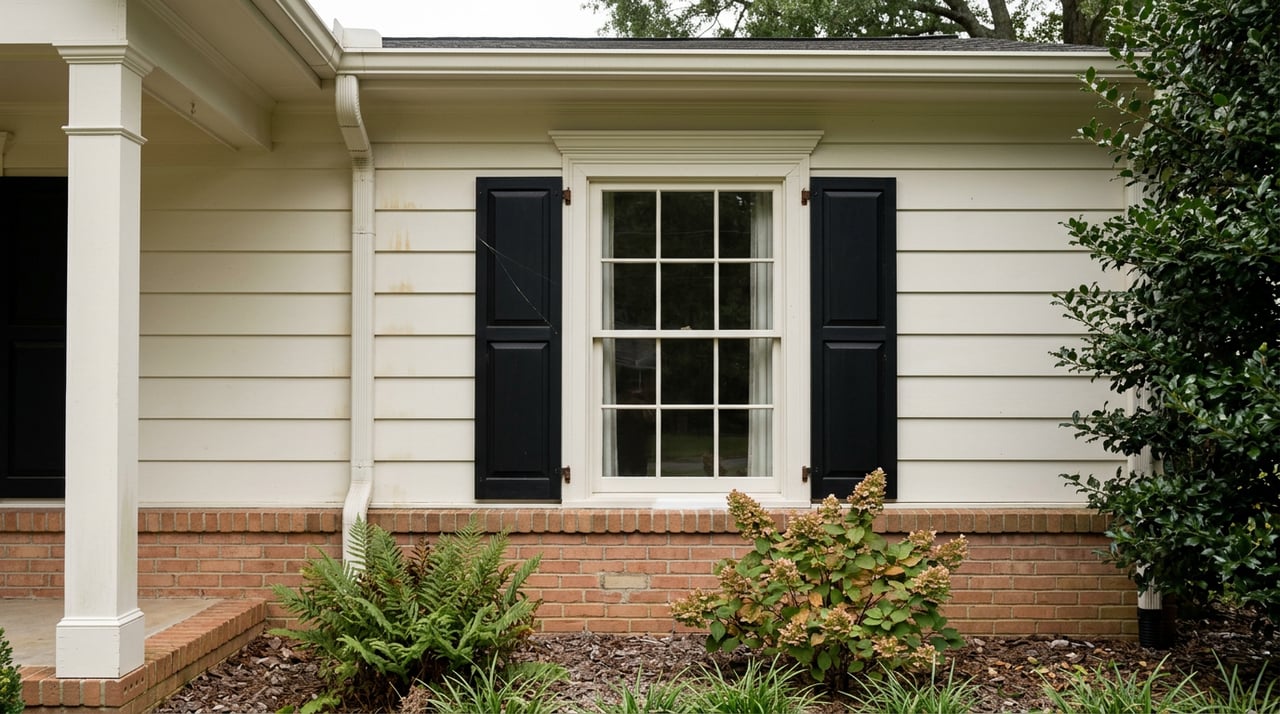
A $12,000 Window and the Real Cost of Buying Historic in Downtown Southern Pines
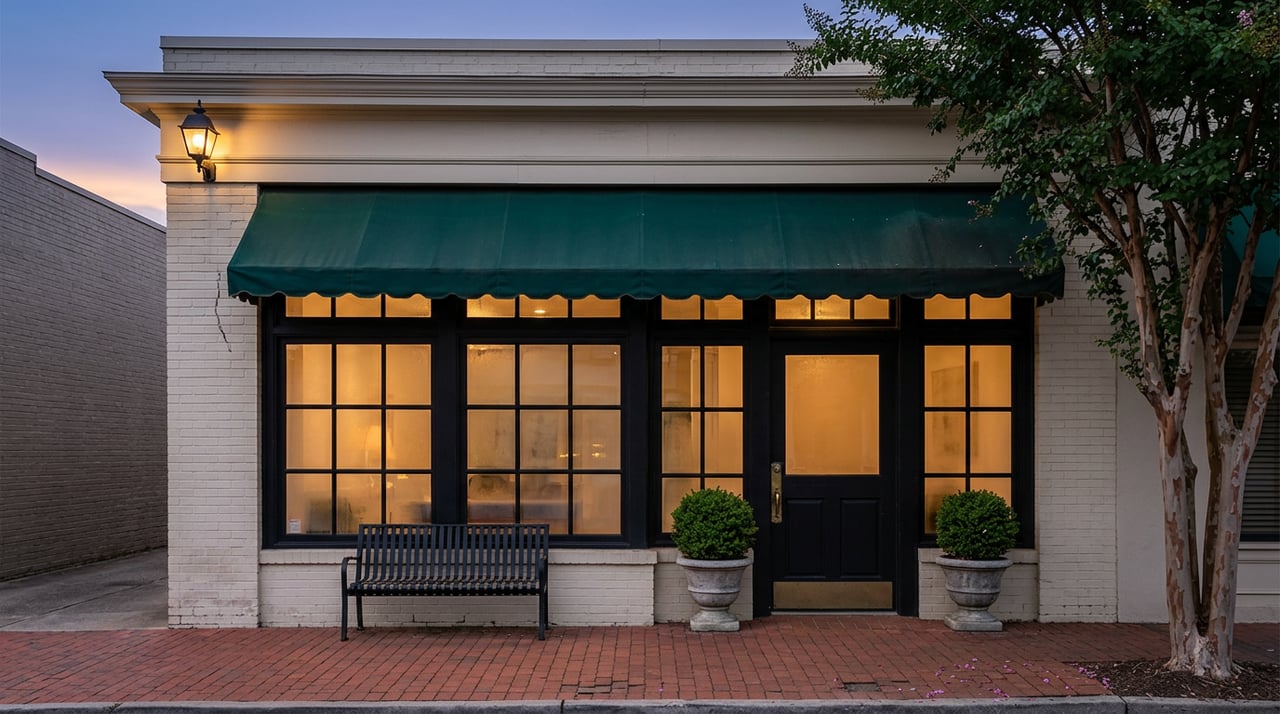
In 2020, the owner of a downtown Southern Pines theater building asked the Town's Historic District Commission for permission to swap out two bowed, leaking transom windows made of prismatic glass. He'd bought the building with the panels already covered in canvas. The repair estimate to save the original 1924 glass came back around $12,000. Replacing it with something similar would have cost far less, but a commission member pointed out that the prismatic glass was a character-defining feature of a contributing building, and the discussion went from there.
That case sat in a public meeting agenda, not a glossy brochure, and it tells you something the listing price never will: in downtown Southern Pines, the cost of ownership isn't just what you pay at closing. It's what the Historic District Commission decides your windows, your siding, or your paint are allowed to be, and that decision can run into five figures before you've moved a piece of furniture.
The Town of Southern Pines has a designated local historic district, and the Historic District Commission reviews applications for construction, alteration, or demolition of buildings inside it, issuing what's called a Certificate of Appropriateness before work can proceed. This isn't a suggestion box. It's a legal requirement layered on top of your regular building permit.
The theater case shows two things that regularly surface in Southern Pines HDC files:
A separate Southern Pines HDC case from the same era involved something as ordinary as a sign. An applicant wanted to install a two-foot by five-foot freestanding sign at 135 East Massachusetts Avenue, and because it exceeded the routine threshold, it went through the same major-works review process, evaluated against the same design criteria found in the Town's Unified Development Ordinance §2.28.10.
Windows. Masonry. Signage. None of these have anything to do with square footage. That's the detail worth sitting with.
Certificates of Appropriateness come in two speeds, and knowing which one applies to your project changes your closing math.
For smaller changes, state law allows the commission to delegate review to staff rather than pulling together the full board, which moves faster. Major works, the kind involving new construction, additions, or anything the theater and sign cases represent, go through a quasi-judicial hearing. State guidance on these hearings points to posted notice at the site and mailed notice to adjoining property owners, typically in the 10 to 25 day range before the meeting, so plan on weeks, not days.
There's a second wrinkle that matters even more for anyone financing renovation work: if your project needs a building permit, the Certificate of Appropriateness has to be issued first. Your contractor can't pull a permit on the strength of a plan alone. The exterior scope has to clear the commission before the permit is issued at all.
None of this means every project turns into a hearing. Ordinary maintenance and repairs made purely for safety reasons are exempt from the review process entirely. Repainting a porch the same color it already is, replacing a broken step, patching a roof leak with matching material, these don't require a trip to the commission. The exemption line sits at whether the work changes the exterior appearance, not whether it costs money.
Here's where the numbers stop behaving the way they do everywhere else in town.
As of August 2026, the median home price across Southern Pines overall sits at $499,900, with an average sale price of $546,858. That's a market moving in a fairly ordinary direction for the Sandhills.
Downtown Southern Pines tells a different story. Over the three months ending May 2026, the median sale price there was $475K, down 12.1% from the same period a year earlier. That decline alone wouldn't be remarkable. What's remarkable is the price per square foot, which came in at $193, down 32.5% year over year. A price drop that size, well beyond the drop in median price, means something structural is happening to how downtown homes get valued, not just a soft month of sales.
The theater window quote explains it. A $12,000 compliance cost doesn't scale with the size of the building. Whether a historic home downtown is 1,400 square feet or 2,800 square feet, the cost of restoring or matching a set of original windows, repairing masonry the approved way, or clearing a major-works hearing is largely the same fixed number. On a smaller home, that fixed cost eats a much bigger share of the price per square foot. On a larger one, it barely moves the ratio.
That's why price per square foot is the wrong yardstick for comparing a downtown historic listing to a newer subdivision home elsewhere in Southern Pines. The subdivision home's renovation costs scale with size in a way a shaker kitchen remodel does. A downtown home's exterior compliance costs scale with the number of character-defining features it has, which has nothing to do with its footprint. When more of the homes trading downtown carry deferred exterior work, the price-per-square-foot number falls hard, even while the median sale price holds up better in dollar terms, because buyers are pricing the work item by item, not floor by floor.
A few habits change the outcome here more than anything else:
Does this apply to a home that isn't old, if it sits inside the district boundary? Yes. The Certificate of Appropriateness requirement attaches to the district and to individually designated landmarks, not to a building's age alone. If your address is inside the boundary, exterior changes go through the same review.
What if I just want to repaint the trim the same color? Routine maintenance that doesn't change the existing design or materials generally doesn't require a Certificate of Appropriateness. The trigger is a change in appearance, not the act of painting itself.
Does interior renovation require review? Interior arrangement and use are outside the commission's authority. The review is about what's visible from the outside.
None of this is a reason to avoid downtown Southern Pines. It's a reason to walk in with your eyes open, budget the right number, and build your timeline around the actual process rather than the one you assumed applied. I've spent enough years working on the Bush Cottage in downtown Southern Pines to know exactly how these conversations with the commission go, and exactly how a project can be planned around them instead of derailed by them.
If you're weighing a historic property downtown, whether you're buying, selling, or settling an estate that includes one, I'd rather walk you through the real timeline before you're under contract than after. Let's Connect.
Whether you’re buying your first home, selling a trust property, or navigating a probate sale, my goal is always the same: to provide honest guidance, strong advocacy, and a smooth experience from beginning to end. Real estate is about people, not just properties. I would be honored to help you take your next step.
BILL SAHADI
1140 US HWY 1 SOUTH SOUTHERN PINES, NC 28387